listOn this page
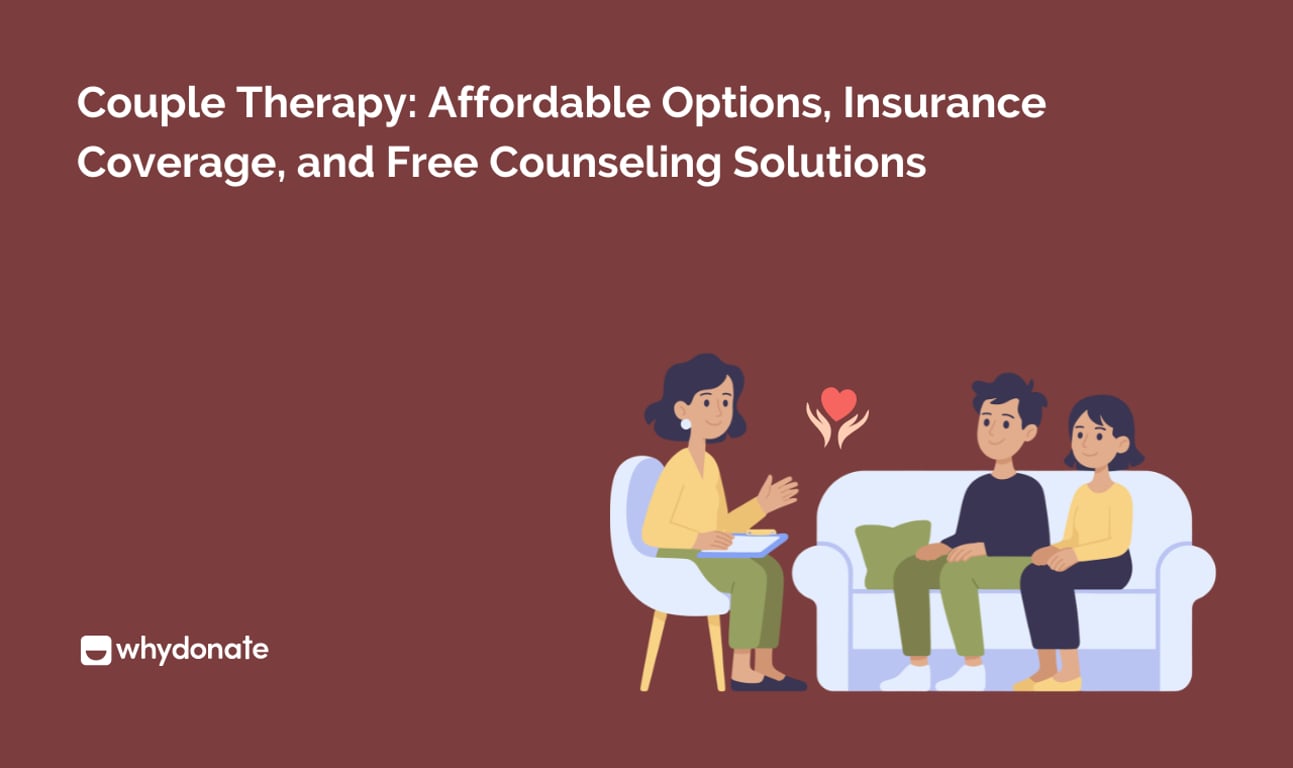
Couple therapy has become a lifeline for people in a long-term relationship, not because something is “broken,” but because both partners want to understand each other again.
Modern therapeutic approaches such as Emotionally Focused Therapy, the Gottman Method, and Solution-Focused Brief Therapy help couples look beneath the surface and identify patterns that have been quietly shaping their relationship. The goal is not blame. The goal is clarity, compassion, and a healthier path forward.
Behind the scenes, mental health strain often builds quietly. Stress, emotional distance, and financial pressure can make it harder to seek support, even when it is needed. Couples therapy is mental health care, not just a relationship improvement tool, yet many delay it because of cost concerns.
What surprises many couples is how confusing the financial side of therapy can be. Some think it costs more than they can handle. Others are unsure about insurance or where to find low cost couples therapy. There is also a growing interest in free couples therapy through community programs and crowdfunding options.
This guide answers those worries in a simple and honest way, offering clear information so couples can make decisions without guesswork.
What Is Relationship Therapy
Relationship therapy is not just two people talking things out with a neutral third party. When you are sitting with a licensed mental health professional, you are in a healthcare setting. The focus is not only on better communication but on understanding how stress, anxiety, depression, trauma, or postpartum changes are shaping the way you relate to each other.
Here is the shift. If arguments are fueled by panic attacks, emotional shutdown, intrusive thoughts, persistent sadness, or crisis-level stress, the work moves beyond relationship advice. At that point, relationship therapy and couple counselling become mental health treatment. A licensed therapist is trained to assess symptoms, document care, build a treatment plan, and use evidence-based methods to reduce distress. That is healthcare, not coaching.
Couples usually come in for reasons such as:
- Constant arguments that start over small things
- Emotional distance or drifting apart
- Recovering after infidelity
- Parenting disagreements
- Stress related to work or finances
Sometimes, the work moves beyond communication. When anxiety, depression, trauma, postpartum stress, or a recent crisis start affecting daily life and the relationship, couples therapy becomes a form of mental health treatment. If there are panic attacks, ongoing low mood, trauma triggers, or emotional withdrawal that feels hard to control, therapy addresses those clinical concerns alongside relational patterns. If trauma is the central thread, our guide to supporting a partner through trauma covers what helps day to day, alongside professional care.
When provided by licensed psychologists, clinical social workers, psychiatrists, or licensed marriage and family therapists, couples therapy is healthcare. These professionals are trained to assess mental health conditions, develop treatment plans, follow ethical regulations, and coordinate care when needed. That level of clinical oversight distinguishes therapy from coaching.
Sessions can take place in an office, online, or in a group setting. Some couples need weekly sessions. Others benefit from a slower pace. Therapy flexes based on the couple’s needs, schedule, and comfort.

Couples Therapy Cost Breakdown
Couples therapy fees reflect the fact that this is licensed healthcare, not a one-time service. Costs accumulate for the same reasons they do in individual therapy or psychiatric care: ongoing sessions, clinical assessment, treatment planning, and the use of specialized, evidence-based methods. You are paying for regulated expertise, documentation, continued training, and structured therapeutic work over time, much like you would for consistent mental health treatment for one person.
The sum of money needed to be paid for the therapy and its frequency depends mainly on the place, another person’s qualifications, and the method of conducting the sessions, online or face-to-face.
Most usual price ranges are:
- Community mental health clinic: around 40 to 80 USD per session
- Digital programs: around 70 to 150 USD for each individual
- Therapists with licenses for private practice: around 75 to 250 USD
- Experts with further education: approximately 150 to 300 USD a session
If both partners decide to go every week, the monthly payment can be anywhere from 300 to 800 dollars. Some therapists apply a sliding scale for their fees or give the option to buy packages at a lower price. Others reserve some spots for couples therapy at low rates for people with limited finances.
A brief overview makes it easier to understand the options you have:
Provider Type | Typical Cost Per Session |
Community clinics | 40 to 80 USD |
Online therapy | 70 to 150 USD |
Private licensed therapists | 75 to 250 USD |
Advanced specialists | 150 to 300 USD |
Being aware of those prices makes it easier to budget and, at the same time, eliminates the fear of surprise costs.
- Get the Help You Need – Raise Funds for Couple Therapy | Get Financial Assistance!

Is Couple Therapy Covered by Insurance
How Medical Billing Works
Insurance only reimburses therapy when it is tied to a diagnosable mental health condition. Therapists must submit claims using medical billing codes linked to a specific diagnosis, such as anxiety, depression, PTSD, or postpartum depression. In these cases, one partner is identified as the patient, and the sessions are coded as treatment for that condition, even if both partners attend. When coverage is denied or limited, some couples turn to medical fundraising support to avoid delaying care.
Why Insurance Often Denies Coverage
If therapy is focused only on relationship conflict or communication issues, there is no diagnosable condition to bill. Since insurers require medical necessity tied to an individual diagnosis, couples therapy is often classified as non-covered and paid out of pocket.
Key points to check with your provider:
- Whether your plan includes out-of-network benefits.
- Whether the therapist can provide a superbill.
- Copay and deductible amounts.
- Annual limits on covered sessions.
- Requirements for preauthorization.
Many workplaces offer Employee Assistance Programs. EAPs often include a small number of free therapy sessions for families and couples. This can be a helpful starting point for couples therapy insurance questions.
Coverage varies widely, so the best step is a short call to the insurance company with your plan number in hand.
Free and Low-Cost Couples Therapy Options
Free and low-cost couples therapy is typically offered through public mental health clinics, nonprofit organizations, and university training centers. These services exist to make care accessible for people who cannot afford private therapy. When coverage is denied or limited, some couples turn to mental health fundraising support to avoid delaying care.
Who Qualifies?
Eligibility often depends on income, insurance status, residency, or specific situations such as being students, new parents, or facing financial hardship. Some clinics use sliding scale fees, while public programs may prioritize couples where a diagnosed mental health condition is involved.
Wait Times and Why These Programs Exist
Because these services are subsidized, waitlists are common and can range from a few weeks to several months. They exist as part of public healthcare efforts to reduce barriers and prevent untreated relationship stress from worsening anxiety, depression, or other mental health concerns.
Therapy does not always require a large budget. For numerous couples, the news about the availability of resources for free couples therapy is very much a relief.
Among the helpful options are:
- Community mental health centers are supported by grants.
- Non-profit counseling organizations.
- University training clinics with supervised student therapists.
- Faith-based counseling programs.
- Sliding scale therapists are listed in directories such as Open Path.
- Government-funded counseling services in certain areas.
Support groups are another option for help that can be quite important. They are not a substitute for therapy, but they can give an emotional connection around problems such as addiction, infidelity, or communication difficulties.
Reliable directories to get couples therapy for free or at a lesser cost include Mental Health America, the American Psychological Association, and OpenCounseling.

Crowdfunding for Couples Therapy
Crowdfunding has become a way for couples to access needed mental health care when cost stands in the way. Therapy often supports anxiety, depression, trauma recovery, or crisis-related stress, and delaying it can allow symptoms and conflict to worsen.
Platforms like WhyDonate give couples a structured way to seek community support for treatment. It is not just financial help. It is a way to protect emotional well-being and make timely care possible when access feels out of reach.
A couples therapy fundraiser can help cover:
- Weekly therapy fees
- Intensive therapy programs
- Transportation costs
- Childcare needed during sessions
To set up a fundraiser:
- Create your campaign on WhyDonate.
- Describe your story honestly.
- Share what type of therapy you hope to attend.
- Set a clear funding goal.
- Share your link with people who care about your well-being.
Examples of campaigns that resonate include titles such as “Help us start couple therapy” or “Support our relationship healing journey.” Crowdfunding gives couples a chance to access support without sinking into financial stress.
Couples Therapy Counseling: How It Works
The intake usually marks the beginning of the process, wherein the therapist gets to know your history, communication styles, and concerns. Then the couple comes in on a regular basis, and the therapist helps to guide them to express each other’s feelings, needs, and habits.
Almost all therapists assign some home tasks to the couples as a way to make them practice the techniques during the interval between the sessions. The activities might be centered on communication strategies, answering personal questions, or tiny shifts in everyday interactions.f
Through therapy, the couple learns to recognize the reasons behind their recurring conflicts, the way they get emotionally triggered, and how to create healthier behavior patterns. The choice of therapy could be secular or faith-based, culturally sensitive therapists, or LGBTQ-inclusive providers.
The therapists must create an environment in which both partners feel safe.
Tips for Choosing the Right Therapist
The best therapist is one who can make both partners feel understood. Look for qualifications like LMFT, LPC, or psychologist. Also, determine whether the therapist has couples counseling therapy as a specialty.
Some useful and positive steps are:
- Searching through Psychology Today, Zencare, and TherapyDen.
- Looking at therapist’ profiles for their experience with your issues.
- Make sure the therapist is open to your culture, identity, and communication style.
- Booking a preliminary conversation, which is usually free of charge.
Warning signs are a therapist supporting one party, downplaying issues, or causing misunderstanding instead of clearing it up.

In a Nutshell
Couple therapy offers a chance to slow down, rebuild trust, and speak to each other with a sense of care instead of frustration. Cost should never be the reason someone avoids healing. With insurance options, community programs, low-cost couples therapy providers, and medical fundraising through WhyDonate, there is always a way to begin.
Reaching out for support is not a failure. It is one of the strongest choices a couple can make for their future. Start your couples therapy fundraiser today!
FAQ (Frequently Asked Questions)
How much does couple therapy cost?
Relationship therapy usually ranges from about 75 to 250 per session, depending on whether you choose a community clinic, private practice therapist, or online platform. Prices also shift based on the therapist’s training, location, and session length. Some therapists offer sliding scales or package discounts to make ongoing care more affordable.
Is couples therapy covered by insurance?
Insurance generally covers couples therapy only when one partner has a diagnosable mental health condition and the sessions are billed as treatment for that condition. Each insurance plan has its own rules, so it helps to check your benefits, ask about out-of-network coverage, and confirm whether superbills are accepted.
Can I find free relationship therapy online?
Yes. Several nonprofit organizations, community programs, and university training clinics offer free or very low cost couples therapy. These services are often run by supervised graduate students or licensed counselors who set aside slots for couples with financial limitations. Availability varies, so exploring multiple directories can increase your chances.
What is the difference between counseling and therapy?
Counseling usually focuses on short-term goals and practical solutions, which makes it helpful for addressing specific challenges. Therapy tends to explore deeper emotional patterns, long-standing conflicts, and the history behind relationship problems. Both approaches can be valuable, and many couples benefit from choosing the one that fits their needs best.
Is couples therapy considered medical treatment?
Yes, when provided by a licensed mental health professional and linked to diagnosable conditions like anxiety, depression, trauma, or postpartum disorders, couples therapy is recognized as structured mental health treatment.
Can crowdfunding be used for mental health treatment costs?
Yes. Many people use crowdfunding to cover therapy, psychiatric care, medication, or related expenses when insurance is limited, denied, or unaffordable, helping reduce delays in accessing needed treatment.

Content writer, Mehak, loves to work in a positive environment with a cup of tea. She has gained experience in writing on various niches, but crowdfunding is what excites her the most. The best part she finds about crowdfunding is that it helps a lot of people in need. Her hobbies are reading, writing, and sketching.