listOn this page
When disaster strikes, the instinct to help is immediate. In a few minutes, earthquakes, floods, hurricanes, wildfires, conflicts, and pandemics can destroy lives. Homes are lost. Families are displaced. Overnight, there is no access to food, water, or medical care.
During such times, the world seeks good avenues that can assist them. With all these calls going around, though, it is understandable to stop and wonder, where will my donation actually go?
This guide will assist you in committing to action for disaster relief charities. You will be informed about the charity organizations involved in disaster relief, how to make smart donations, and the organizations that are reliable enough to provide emergency assistance and recovery programs over the long term. Informed support is life-saving, whether you want to donate, raise money, or inform people.
Understand Where Your Disaster Relief Donations Go
Disaster relief is not a single moment; it’s a process that unfolds over time.
- Immediate relief (first 72 hours): It is aimed at saving lives. Donations assist in offering emergency shelter, clean drinking water, distribution of food, medical teams, and search and rescue.
- Short-term recovery: This focuses on immediate demands following the first crisis. This will involve housing the temporary shelters, hygiene packets, trauma treatment, and reinstatement of essential facilities such as electricity and sanitation.
- Long-term recovery: It is less focused on, yet it needs to receive long-term funding. Reconstruction of property, infrastructure, livelihood sustenance, counseling, and re-establishment of schools can consume months or years.
A key challenge is the funding gap. The highest donations occur during media attention and drastically drop after the media attention; at that time, communities need assistance. This is the reason why the role of the trusted disaster relief charities and local foundations is so vital in the sustainable recovery.
Tips to Donate to Disaster Relief Charities Wisely
Donating wisely ensures your support reaches people who need it most.
- Verify the organization. Check the transparency, governance, and impact with the help of such trusted evaluators as Charity Navigator, Candid, or the BBB Wise Giving Alliance.
- Choose cash over goods: money donations are quicker and more dynamic and enable charities to buy precisely what is required in the area to save delays and wastage.
- Watch for scams: Beware of unsolicited messages and pressure, gift card requests, or even vague instructions on how to spend the money.
- Look for transparency: The mainstream disaster relief charity groups have robust information on their distribution of donations, and they report on results.
Donating is powerful. Informed donation is life-saving. If you’re ready to support a verified cause, explore trusted platforms and check out top websites for fundraising to donate with confidence.
Top Disaster Relief Charities You Can Support
Below is a curated list of top disaster relief charities to help you quickly understand their focus and impact.
1. American Red Cross
Provides emergency shelter, food, health services, and emotional support to respond to more than 60,000 disasters each year. Overall, the rapid response and large-scale operation in the hurricanes, floods, wildfires, and house fires around the U.S. and the world.
2. Direct Relief
Provides disaster relief of medical supplies, equipment, and medicines to affected regions in the world. Collaborates closely with local healthcare providers to make sure that aid is received in clinics and hospitals in case of an emergency.
3. International Rescue Committee
Helps individuals who have been displaced by disasters and war with healthcare, water, mortar, and education. Concentrates on assisting families to restore normalcy and pride following crisis scenarios.
4. Save the Children
Makes the needs of children a priority in case of a disaster, which involves feeding them, providing secure places, and ensuring health and education continuity. Respond to crisis areas to ensure that children are not subjected to permanent damage in case of emergency situations.
5. World Central Kitchen
Quickly provides hot, nutritious food to disaster response areas. Partnerships with local chefs and kitchens to deliver emergency food relief and build local economies in case of crisis.
6. ShelterBox
In partnership with other organizations, supplies emergency shelter packs to homeless families in the form of tents, tools, and household necessities. Concentrates on recovering the lost safety and dignity following the disaster across the globe.
7. Team Rubicon
Deploys military veterans and volunteer professionals to provide fast disaster response, cleanup, and reconstruction. Famous in terms of speed, discipline, and efficient coordination in case of an emergency.
8. Convoy of Hope
Food, water, hygiene supplies, and emergency aid are provided in a global network that is based on faith. Funds for short- and long-term community reconstruction.
9. All Hands and Hearts
It is a volunteer-based foundation that aims to reconstruct houses and schools following disasters. Collaborates well with the local communities to enhance long-term recovery and resilience
10. Samaritan’s Purse
Provides emergency medical services, shelter, clean water, and long-term rebuilding services. One of the famous Christian disaster relief groups that responds to a crisis worldwide.
11. Americares
Distributes medicines, health programs, and emergency response efforts to disaster areas. Targets to regain healthcare access in the case of an emergency and after.
12. The Salvation Army
Shelters, feeds, takes care of emotionally, and offers recovery services during disasters. They are often the first responders, and there are long-term programs that assist the families that have been affected.
Tip: Local community foundations and regional nonprofits often deliver the most direct aid. Consider checking local disaster relief charity organizations alongside global groups.
Beyond Donations: Other Ways to Make a Difference
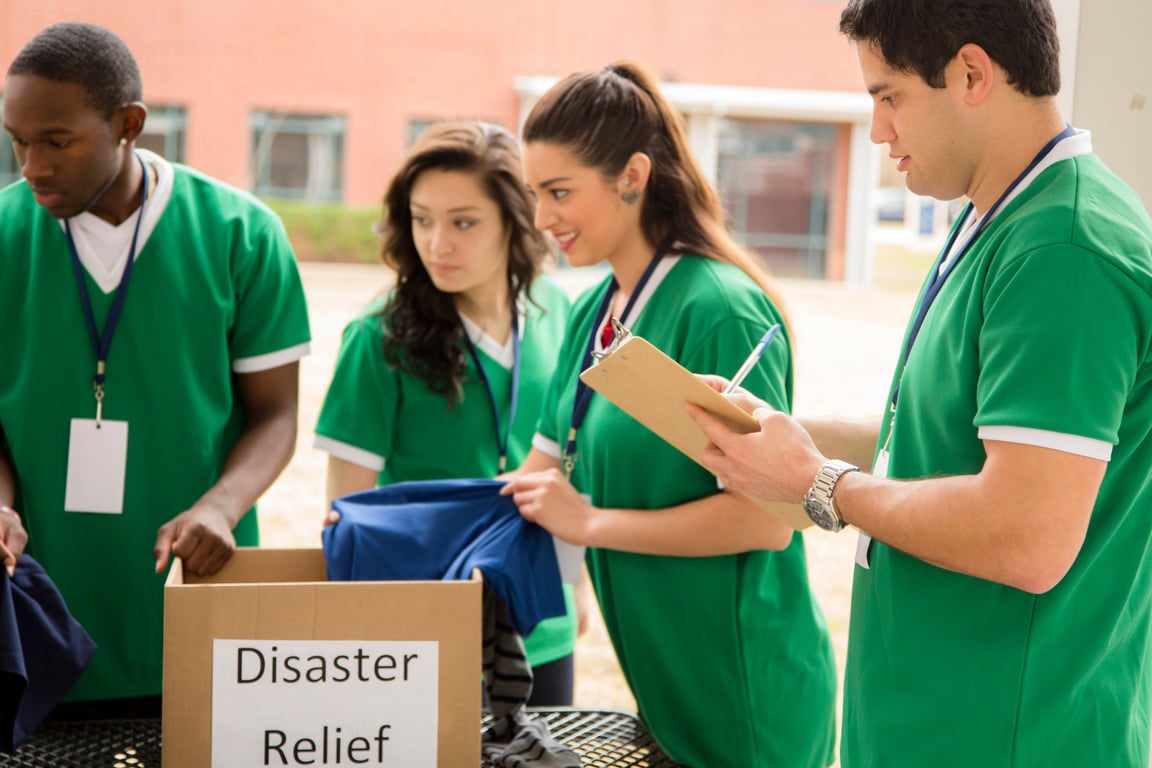
Money matters, but it’s not the only way to help. Volunteering with relief organizations (when trained and requested) supports recovery efforts directly. Many groups offer disaster preparedness and first-aid training programs.
Businesses can contribute through corporate matching gifts, logistics support, transportation, warehouse space, or employee giving campaigns. Another thing you can do is to amplify trusted campaigns on social media. Sharing verified fundraisers ideas spreads awareness and mobilizes support far beyond your immediate network.

Why Crowdfunding Is a Powerful Disaster Relief Tool
Crowdfunding bridges funding gaps that conventional aid is not always able to bridge. It enables persons and societies to act instantly, raise money most transparently, and assist with certain needs.
Such websites as WhyDonate allow the organization of rapid, safe, international fundraising campaigns that are particularly needed when families or local organizations are in an emergency and institutional support does not arrive on time.
Your Action Provides Hope
The damage caused by disasters is permanent, but wise giving enables the community to collect, reintegrate, and restore a normal state.
Now you will be able to take informed action. Donate to a disaster relief charity that is trusted, share approved posts, or create a fundraiser to assist families in rebuilding their lives.
Take Action Today:
- Contributions to Disaster Relief
- Start Raising Money to Change Lives
- Launch a Secure Fundraiser on WhyDonate
- Share this Guide to Help More Communities
Compassion, when guided wisely, becomes real hope.
Frequently Asked Questions
1. What is the best disaster relief charity to donate to?
There’s no single best option. The best disaster relief charities are transparent, experienced, and active in the affected region.
2. Can I start a disaster relief fundraiser without being a nonprofit?
Yes. Individuals can raise funds to support affected communities through trusted crowdfunding platforms.
3. Are there private companies involved in disaster relief?
Yes. Some private disaster relief companies support logistics, medical supply chains, and infrastructure recovery, often working alongside nonprofits.
4. How do Direct Relief payments work for disaster victims?
Direct Relief focuses on supplying medical aid to healthcare providers rather than direct cash payments to individuals.
5. How do I apply for the Red Cross disaster relief charities $2,000 application?
Eligibility and assistance amounts vary by disaster. Contact local Red Cross chapters or disaster assistance centers for application details.
6. What are reputable Christian disaster relief organizations?
Samaritan’s Purse, Convoy of Hope, and The Salvation Army are widely recognized Christian disaster relief organizations.

Content Writer Intern Samriddhi is a content writer working in the crowdfunding space, focused on turning complex financial and fundraising topics into clear, relatable stories. She writes with empathy, accuracy, and intent so readers don’t just understand the message, they feel confident taking action when it matters most.