listOn this page
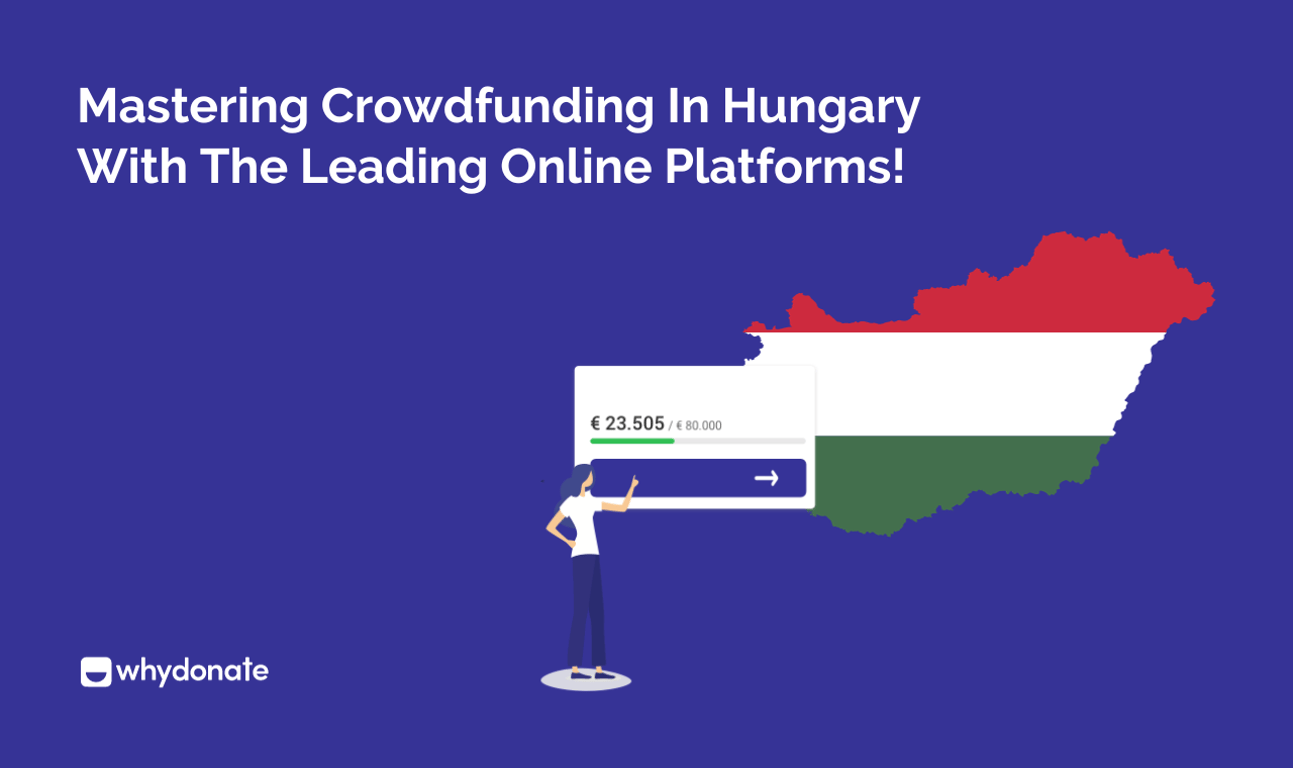
Hungary's non-profit sector is bigger than most people realize: around 53,000 registered NGOs, supported by roughly 350,000 volunteers, with about 87% depending on individual donations to keep running (NIOK Foundation research, 2022). Yet most crowdfunding searches from Budapest or Debrecen turn up guides written for an American or British audience, with no local platforms, no EU funding context, and nothing on scholarships. This guide covers all three: the 10 best platforms for crowdfunding in Hungary, what the EU funding deal announced in May 2026 means for Hungarian charities, and where students can look for fully funded scholarships in 2026.
TL;DR: Hungary has no dedicated crowdfunding law. Campaigns run freely under general civil and financial regulations. WhyDonate leads on 0% platform fees and flexible payouts, with Payout Weekly, Payout Monthly and Payout Now options. For charities, €16.4 billion in EU cohesion and recovery funds was unlocked for Hungary in May 2026. Students can also apply for the fully funded Stipendium Hungaricum scholarship, which opens each November.
Is Crowdfunding Legal in Hungary? What Fundraisers Need to Know
Yes. Donation-based crowdfunding in Hungary operates freely under general civil law, with no dedicated crowdfunding legislation for individual campaigns. Raising money for a personal cause, medical bill, or community project means operating under Hungary's general Civil Code rather than a specialized fundraising statute.
Charities and registered NGOs sit under a different framework, with registration requirements, reporting obligations, and rules around soliciting and using donations.
Non-Hungarians can fundraise for causes based in Hungary, and vice versa. Most major platforms, including WhyDonate, accept campaigns regardless of nationality, though payout methods vary by provider. Medical costs, funerals, education, disaster relief, and registered charity appeals are all common, accepted categories.

The 10 Best Crowdfunding Platforms in Hungary: Side-by-Side Comparison
Here's the comparison most guides skip: ten platforms available to Hungarian fundraisers, including two local ones you won't find on generic “best crowdfunding sites” lists.
Platform | Platform Fee | Transaction Fee | Best For | Withdrawal Speed | Hungary Support |
WhyDonate | 0% | 1.9% + 85 Ft | Charities, individuals, NGOs | Weekly, monthly or on request | Available |
GoFundMe | 0% | 2.9% + local currency fee | Personal causes | Standard | Available |
JustGiving | 0% | 1.9% + 20p (UK) / 2.9% + 20p (other) | Registered charities | 14-day hold | Charity-only |
Kickstarter | 0% platform + 5% success fee | 3–5% (Stripe) | Creative projects | On goal completion only | Available |
GoGetFunding | 0% | Transaction fee applies | Personal campaigns | Standard | Available |
Chuffed | 0% | Transaction fee applies | Nonprofits | Standard | Limited |
Crowdbound | 0% | Transaction fee applies | Books and social projects | Standard | Limited |
Adjukössze | 0% | Card processing fee | Hungarian NGOs only | Standard | Local platform |
4fund.com | 0% | Optional voluntary tip | Individuals and nonprofits | Standard | Available |
Tőkeportál | N/A | 5% success fee | Equity/startup funding | On completion | Hungarian platform |
Fees change, so it's worth checking each platform's current pricing page before you commit to one.
Most big international names charge 0% on the platform side but still take a percentage-plus-fixed-fee cut through their payment processor, standard across the industry. Kickstarter is the outlier: built for creative, all-or-nothing projects, so if your campaign doesn't hit its goal, nobody gets paid, including you.
The two Hungary-native platforms deserve a closer look since almost nobody covers them. Adjukössze, run by the NIOK Foundation, is essentially the backbone of Hungarian NGO fundraising, restricted to registered non-profits but trusted and locally recognized. Tőkeportál is an ECSPR-regulated equity platform, where people invest for a stake rather than donate, a different category from the rest of the table.
For most fundraisers, the decision comes down to fees, payout speed, and Hungarian language and forint support. That's where WhyDonate comes in.
WhyDonate in Hungary: Why Hungarian Fundraisers Choose It
WhyDonate is the only platform here offering all four things Hungarian fundraisers ask for at once: no platform fee, fast payouts, full customer support, and an existing donor base rather than starting from zero.
WhyDonate charges 0% platform fees; standard payment processor fees apply. That matters, since plenty of platforms advertise “free” fundraising while building their cut into payment processing instead. On forint donations WhyDonate's processing fee is 1.9% + 85 Ft, and on euro donations 1.9% + €0.25, with a €0.35 flat fee for iDEAL | Wero and Bancontact. Transaction costs can be a bit higher depending on the payment method used.
Payouts are one practical difference. Some platforms hold funds for two weeks, a real problem for a medical or emergency fundraiser. WhyDonate lets you choose Payout Weekly, Payout Monthly or Payout Now instead. Stripe clears donations in up to 3 business days, plus 0 to 2 business days for the money to reach your bank account.
The platform is built for a Hungarian audience rather than translated as an afterthought. Campaign pages, donation flows, and receipts all work in Hungarian, and HUF is supported directly, avoiding the currency friction that pushes donors to abandon a donation halfway through. WhyDonate also has a donor database of 1.7M+ supporters across Europe (the figure continues to grow; see About Us for the current number), giving new campaigns a head start.
Custom branding lets charities make their page feel like an extension of their site, and multilingual support means one campaign can reach Hungarian donors alongside supporters abroad. More on the 0% platform fee and payout options page.
Start your fundraiser — it's free
EU Funding in Hungary: What the €16.4 Billion Means for Charities and Nonprofits
On 29 May 2026, the European Commission and Hungary's Prime Minister Péter Magyar announced the release of €16.4 billion in previously frozen EU funds, the largest single funding unlock in Hungary's post-accession history. The money had been withheld for years over rule-of-law concerns under the previous government, and its release followed rapid reform commitments after Magyar took office.
That's roughly 13% of Hungary's annual GDP (AP via US News, May 2026). The package breaks down into around €10 billion from the EU's Recovery and Resilience Facility, €4.2 billion in cohesion funds, and €2.2 billion tied to academic freedom reforms, with clear relevance for Hungary's education sector alongside energy, transport, housing, and healthcare.
Here's what most crowdfunding guides miss: this money doesn't land directly in an NGO's bank account. EU structural and recovery funds go through government programs and calls for proposals, not individual applications. That takes time, and plenty of Hungarian NGOs in education, healthcare, and social services will be watching the rollout for months. Some are turning to crowdfunding to bridge that gap, meanwhile.
A few practical steps help if your organization wants to position itself for this funding:
- Check your registration status, since most programs require formal NGO or public benefit status.
- Watch for government-run calls for proposals, since funds go through national bodies, not direct EU applications.
- Talk to a grants advisor about which program matches your work.
- Keep records of past project outcomes as evidence for applications.
- Run a parallel crowdfunding campaign for time-sensitive needs while a grant timeline plays out.
Hungarian NGOs should check the European Commission's cohesion policy pages and Hungary's government funding portals for official guidance.
How to Choose the Right Funding Source for Your Cause in Hungary
Which route makes sense depends mostly on timeline, cause type, and whether you're an individual, a registered NGO, or a student.
Need money quickly for a medical bill, funeral costs, or an urgent situation? Crowdfunding is the only option that moves fast enough, since grants and EU programs can take months.
Running an NGO with a longer-term project? A combination works best: apply for EU grants or domestic funding for the bulk of the cost, and use crowdfunding for gaps or to build a donor community beyond one grant cycle.
A student? Scholarships come first. Programs like Stipendium Hungaricum cover tuition and living costs, so secure that before crowdfunding for what a scholarship doesn't stretch to, such as travel costs.
A quick checklist:
- What is your timeline?
- Is your cause donation-eligible under the platform's terms?
- Are you a registered NGO or fundraising as an individual?
- Do you need funds quickly, or can you wait on a grant cycle?
- Can you promote your campaign on social media, or do you need an existing donor base?
How to Launch a Successful Crowdfunding Campaign in Hungary in 2026
A successful Hungarian crowdfunding campaign comes down to three things: a clear story, the right platform, and active sharing in the first 48 hours, when campaigns typically get the bulk of their donations.
- Choose a platform matching your cause type, using the table above.
- Set a realistic goal. Too ambitious discourages donors, since an empty progress bar signals a stalled campaign.
- Write your story in Hungarian and English to widen your reach without a second page.
- Add a campaign video, which consistently outperforms text-only pages.
- Share with your network first, since early donors build momentum for strangers to give too.
- Post regular updates, since a quiet campaign tends to stall.
- Thank donors within 24 hours to encourage repeat support.
Two real Hungarian examples show this in practice: a family raising funds for a father's recovery and support for Gergő's family with travel and repatriation costs.
Wrapping Up!
Hungary's fundraising landscape is more layered than most guides let on: crowdfunding platforms, two genuinely local options, and now a major EU funding unlock reshaping things for charities in education, healthcare, and infrastructure.
A few things worth remembering:
- Crowdfunding in Hungary runs freely under general civil law, with no dedicated legislation to navigate.
- WhyDonate offers 0% platform fees, flexible payouts (Weekly, Monthly or Payout Now), and full Hungarian language support, a strong starting point for individuals and NGOs alike.
- The €16.4 billion in EU funds unlocked in May 2026 will take time to reach individual organizations, so crowdfunding can bridge that gap.
If your organization is waiting for EU cohesion funds, crowdfunding can bridge the gap immediately. Start your fundraiser — it's free.
FAQs (Frequently Asked Questions)
Is crowdfunding legal in Hungary?
Yes. Donation-based crowdfunding operates under Hungary's general civil law rather than a dedicated statute. Charities and NGOs also follow non-profit registration rules. For anything specific, particularly tax treatment, speak with an accountant or legal advisor (Hungarian Civil Code).
Which crowdfunding platform is best for charities in Hungary?
WhyDonate and Adjukössze are the strongest options. WhyDonate offers 0% platform fees, flexible payouts (Weekly, Monthly or Payout Now), and full Hungarian language support alongside an existing donor base. Adjukössze is restricted to registered non-profits only.
How do I receive EU funding as a Hungarian NGO?
EU cohesion and recovery funds go through government programs and calls for proposals, not direct applications to Brussels. Registered NGOs should watch sector-specific calls and keep documentation of past outcomes ready (European Commission, cohesion policy).
Can I crowdfund in Hungarian forints (HUF)?
Yes, on platforms with local currency support. WhyDonate accepts HUF directly, avoiding conversion friction that causes donors to abandon a donation partway through.
Are crowdfunding donations taxable in Hungary?
This depends on the recipient, amount, and how funds are used, so there's no single answer. Personal and organizational donations can be treated differently under Hungarian tax law. Speak with an accountant for your situation.
What is the difference between EU cohesion funds and crowdfunding?
EU cohesion funds are government-administered grants tied to sectors like infrastructure or healthcare and can take months to reach an organization. Crowdfunding is direct, donor-to-cause funding that can move within days.
How long does it take to receive money from a Hungarian crowdfunding campaign?
This varies by platform. WhyDonate offers Payout Weekly, Payout Monthly and Payout Now. Stripe clears donations in up to 3 business days, plus 0 to 2 business days for the money to reach your bank account. Some platforms hold funds for up to 14 days or release money only once a goal is met, as with Kickstarter. Check the withdrawal speed column above if timing matters.

Mehak loves to work in a positive environment with a cup of tea. She has gained experience in writing on various niches, but crowdfunding is what excites her the most. The best part she finds about crowdfunding is that it helps a lot of people in need. Her hobbies are reading, writing, and sketching.