listOn this page
What is a Grant Proposal?
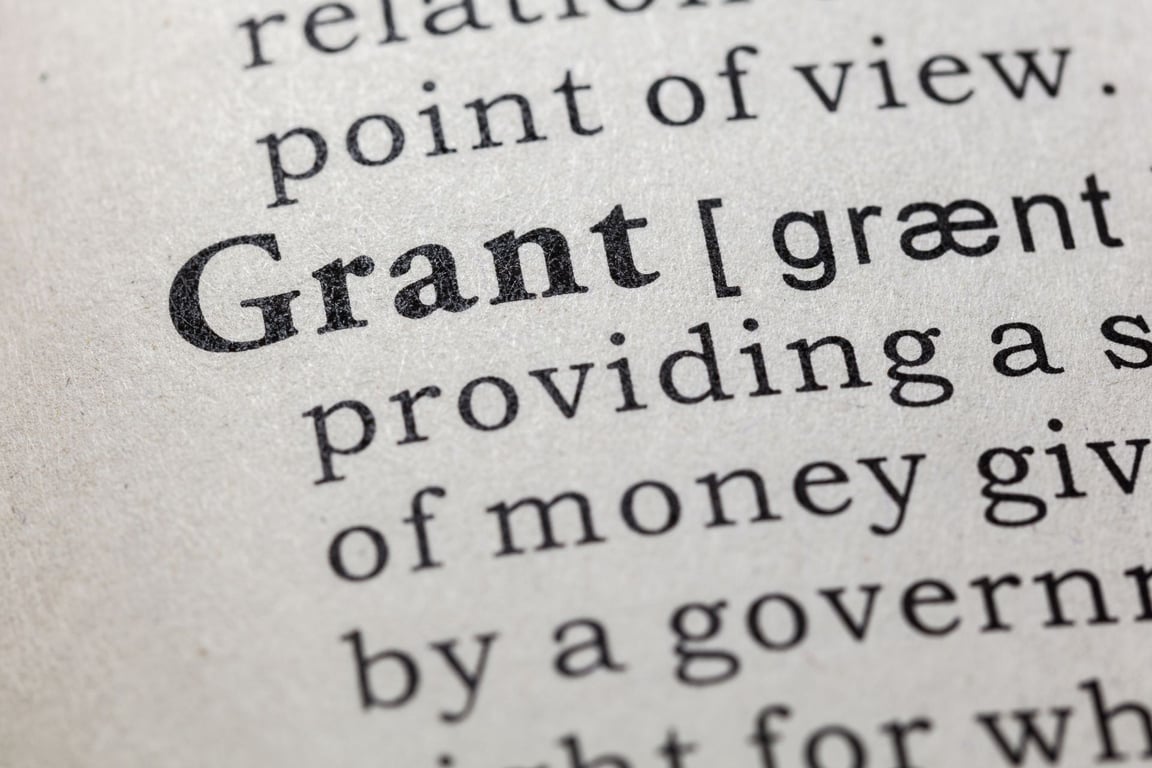
A grant proposal is a request for investment or financial support submitted through an application to a nonprofit organization. Here, the word ‘grant’ means the amount of money the funder/investor offers to the organization. The receiver is called the ‘grantee’ and receives the money.
Not only in the context of big companies, but one can also use this grant proposal to obtain financial assistance from the relevant authorities. For example, a student can approach the educational institute with a grant proposal and receive funds for further studies without paying anything back to the institute.
Grants are non-repayable capital usually provided by government agencies, corporations or foundations. Unlike loans, organizations do not need to pay these funds back to the source and can solely focus on their mission.
- Wish to Ease the Financial Burden? Start a Fundraising Campaign for Free at WhyDonate!
Types of Grant Proposals
Understanding types of grant proposals will not only help you understand how you should start planning, but also help you to seize the right opportunity for your mission.
1. Project/Program Grants
This grant proposal requests support for a specific project or program that outlines a vital purpose. It requires you to think beyond the grant and mainly focus on the purpose and objectives of your project and how the grant can assist you in fulfilling the referenced purpose.
2. Capital Grants
To fund your projects or to execute your plan, you need capital or investment on a large scale. Money is something that you will require almost at every stage. To cover this expenditure, a capital proposal is made. It connects you with investors and convinces them to fund your project.
3. General Operating Grants
Apart from the project and capital funds, sometimes a need may arise to fund less specific operations and management of the project. To financially operate these in-between or ongoing functions, you can use the General Operating Grants’ help. This is another type of grant commonly used for the past few years.
4. Matching/In-Kind Grants
This grant also demands some percentage of share or contribution from the grantee’s side. It may be shared regarding equipment, personnel, goods, etc. In this grant, collaborative efforts are key. This also enhances the strengthened partnership between the two parties. It’s highly valuable and provides significant benefits.
Common Myths About Nonprofit Grants
Some told, or untold, myths follow every existing concept. Similarly, nonprofit grants also hold certain myths. Let’s see what those are:
Myth 1: Grants are just “free money.”
The first and widely known myth about grants is that they are ‘free money’, which is totally misunderstood. Grants come with a pack of full-fledged terms and conditions that are strictly bound to follow. Failing which, the given money can be seized or even lead to serious punishments.
Myth 2: Getting grants is easy.
Secondly, it’s not very easy to access grants, and you need to understand the ins and outs of how to apply. However, the fact is that competition is everywhere. You need to stand more precisely than others in the line; only then do you seek the opportunity for grants.
Myth 3: One good proposal works for all funders.
Every proposal has its own criteria and needs to be tailored accordingly. A single proposal will not meet all application guidelines. Reusing the same content without customization significantly lowers your chances of approval.
Myth 4: Only professional writers can win grants.
Anyone who is truly in need of funds can win grants. Because it is not about how you write the proposal, but also the reality behind it.
How to Write a Grant Proposal: Step-by-Step
To write a successful grant proposal, you must be careful about many key points and the content you are including. Let’s understand this more precisely through 10 essential points:
1. Cover Letter
A cover letter is an introduction to your proposal and a brief description. Here, you give a little detail on every upcoming part of the proposal so that the grantor can get a subtle idea of what the proposal includes. Hence, it is an integral part of any grant proposal and must be considered carefully.
2. Executive Summary
This part doesn’t contain precise information. Instead, it summarizes the entire grant proposal. Here, you can add the reason behind asking for funding or why it matters to you, your overall organizational mission, and how your current project can positively fulfill your goals and objectives.
3. Statement of Need
This part outlines the issue you are trying to solve through your project. Here, you dive deeply into the issue you are trying to tackle with your project. Grantees are also eager to know and want to ensure their money is worth investing in a project. SO, share real-life stories and local context to show the urgency of your proposal.
4. Objectives and Goals
Every project is set with specific goals and objectives to accomplish. Including these positive and effective goals brightens your grant proposal. This tells the grantors what purposes or changes their money is being used for and what outcomes they can expect through projects. So, mention a detailed analysis of your objectives or goals.
5. Methods and Strategies
The next step you can include is mentioning the roadmap and methods or strategies you will use to achieve the target. Grantors are very interested in knowing your methods to determine whether you get some positive outcomes out of your project so that their given grant can hold some value.
6. Plan of Evaluation
To win credibility, it’s a must to let your grantor know your detailed evaluation plan. You need to show the funder some realistic measures and timelines of your project, and how the grantor spent money on the project. It boosts the integrity of the relations.
7. Budget
Your budget part needs detailed information on how and where the money is invested in the project. Generally, it’s a table or long description elaborating on the areas where funds are attached. This section is equally essential as the others, so don’t avoid mentioning your project’s budget. Using Autofill Excel can help streamline budget creation by quickly populating formulas, dates, and recurring expense entries while reducing manual errors.
8. Sustainability Plan
- Describe how the project or its impact will be maintained after grant funding ends.
- Address ongoing resources, partnerships, or additional funding strategies.
- Assure funders of the long-term value of their investment.
9. Organizational Information
Add your organization’s credibility markers. Share personal information about the organization to which a grantee is giving the funds. The grantor should know with whom it is getting into a collaboration or partnership and their workings. It includes the names, past achievements, backgrounds, services, mission, and objectives of the organization, etc.
10. Attachments and Appendices
- Include additional information like resumes, letters of support, and bank financial statements.
- Provide all the necessary documents that will support the proposal’s claims.
- Meet funder-specific requests for additional documentation.
Tips for Writing a Successful Grant Proposal
It is important to write a grant proposal that connects with the reader, is credible during a background check, and just moves people to a certain point that will push them to help your cause.
- Respect funder’s regulations: Demonstrate clearly how your project supports the funder’s priorities.
- Be clear: Use simple, precise language that conveys your ideas effectively.
- Follow guidelines: Adhere strictly to the funder’s formatting and submission instructions.
- Use data and evidence: Provide relevant statistics, references, and examples to support your claims.
- Highlight impact: Clearly articulate the potential benefits and outcomes of the project.
- Edit and review: Proofread rigorously for clarity, coherence, and accuracy.
Why Use WhyDonate for Your Fundraising?
Getting grant proposals is like moving mountains. Even if they are hugely rewarding, one cannot ignore the fact that accomplishing them is extremely difficult while following a strong set of rules. On the other hand, starting a crowdfunding campaign online is easy, simple, and provides you with a similar opportunity to get funds without strings attached.
Trusted platforms like WhyDonate give you a forum to exhibit your mission to millions of people across the globe who can help you financially without expecting anything in return. Apart from just a platform, it gives you tons of built-in tools that can help with managing and accessing the donations easily.
WhyDonate is globally available in 100+ countries, 19 languages, and 15+ payment methods for a simple fundraising experience.
Explore more by starting a fundraiser without any paperwork.
In a Nutshell
Writing a grant proposal demands hefty time and consideration from you. They are not a piece of cake; it takes lots of effort, analysis, and research to justify your request for funding. In addition, from the professional to the personal level, you must build a smooth and cordial partnership with your investor. Add every relevant little detail precisely, making every word stand and speak for your project. Grant proposals will benefit you immensely once you know their significance and how to write them to fetch investment.
- Get Relief from Financial Burden Today with WhyDonate. Start a Fundraiser for Free!
FAQs (Frequently Asked Questions)
What are grants?
Grants are the sum of money requested by the one who writes a grant proposal to a grantor to operate their project.
How do you write a good grant proposal?
A good grant proposal includes all necessary aspects like the cover letter, executive summary, missions and objectives, need of statement, etc. It should contain similar interests to those of investors.
What is the use of a grant proposal?
Grant proposals are used to request funding from investors for your targeted large-scale project. It provides you with monetary or economic aid.
How long does it take to write a grant proposal?
Generally, if the grant proposal has a straight and basic plan, you may meet its end in 4-5 hours, but if it’s a bit complex, it may take 20-30 hours and even more.
How to review a grant proposal?
A grant proposal review can be done by following the following main steps: application, programmatic, and financial review.

Content writer, Mehak, loves to work in a positive environment with a cup of tea. She has gained experience in writing on various niches, but crowdfunding is what excites her the most. The best part she finds about crowdfunding is that it helps a lot of people in need. Her hobbies are reading, writing, and sketching.