
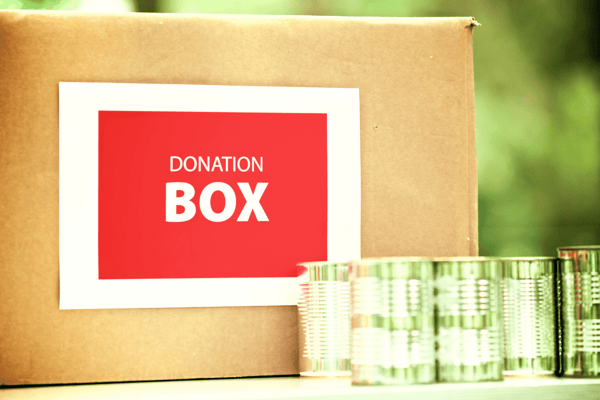
Donation boxes are among the simplest yet successful forms of physical fundraising. Donation boxes are often located in stores, places of worship, or community events, and give the public a chance to donate spare change or small cash donations to something meaningful. Despite the rise of digital fundraising, donation boxes still provide an easy way for people to donate offline.
The Salvation Army’s iconic red kettle donation boxes, placed in retail stores and public spaces during the winter holiday season, raise up to $50 million annually in the United States alone.
This guide will help you understand everything you need to know about donation boxes: legal requirements, placement strategies, design tips, and real-world examples.
Want to raise even more? Start your free WhyDonate fundraiser alongside your donation box.
Why Use Donation Boxes for Fundraising?
Donation boxes remain one of the most affordable and visible fundraising tools. They require little upfront cost and can collect funds passively.
Placed in high-traffic spots such as shops, cafés, or religious venues, they serve as a constant reminder of your cause. Even small change adds up quickly over time.
Donation boxes are also versatile. Whether you’re fundraising for animal rescue, medical treatment, or local community fundraising projects, donation boxes can be made to suit virtually any cause and can be used anywhere!
In essence, donation boxes act as passive fundraising tools that work around the clock: perfect for supplementing online campaigns or reaching donors who prefer giving in cash.

Set up a charity donation box for your crowdfunding campaign – Start Your Crowdfunding Journey Here!
Legalities to Consider Before Placing a Donation Box
Before placing a donation box, it’s a good idea to familiarize yourself with local laws. In many countries throughout Europe, you may be required to have permission from local authorities or the venue owner in order to place a charity box.
Start by contacting your municipality or local town hall regarding regulations for public fundraising. Some municipalities require you to register a campaign, or you provide identification on the box verifying that it is a legitimate charity box.
Larger organizations should also keep a record of where each box is placed and who is responsible for collection.
Legalities to Consider Before Placing a Donation Box
Before placing a donation box, it’s a good idea to familiarize yourself with local laws. In many countries throughout Europe, you may be required to have permission from local authorities or the venue owner in order to place a charity box.
Start by contacting your municipality or local town hall regarding regulations for public fundraising. Some municipalities require you to register a campaign, or you provide identification on the box verifying that it is a legitimate charity box.
Larger organizations should also keep a record of where each box is placed and who is responsible for collection.
Types of Donation Boxes
How you want to collect donations will determine what box you need.
1. DIY Donation Boxes
This is the easiest and cheapest option. A DIY donation box can be made with recycled items such as shoeboxes, tin cans, or mason jars. You can add paint, wrapping paper, or stickers to decorate your box. Usually right for small fundraisers, school projects, or community events with no other marketing objectives, where fun and creativity are w
elcome.
2. Professional Donation Boxes
If your organization wants something a little more rugged and secure, the professional donation box is for you. You’ll find these types of donation boxes made from acrylic or metal (with locks). Makes it tamper-resistant, which is critical when collecting money from donations while out in public.
3. Digital Donation Boxes
Digital donation boxes are one way to connect physical donations with online donations, and make the process easier for supporters wanting to avoid cash when donating. Digital donations use QR codes or online donation widgets, allowing donors the option to donate quickly, personally, and at the touch of their phones.
How to Set Up a Box for Donations
(Step-by-Step Guide)
Do you want to set up a donation box or make one yourself? Here’s a simple guide to help you create a donation box, whether it’s DIY or professionally made.
1. Choose a Container
Choose a durable container that will fit your needs. The container could be a shoebox, a mason jar, a tin can, or an acrylic box, to name a few. The container should not be small, so you can collect coins as well as notes.
2. Create a Slot
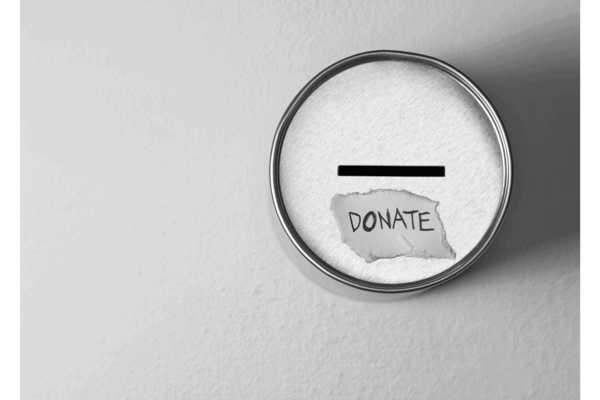
You will need to cut a neat slot in the top of the box. The slot needs to be wide enough to fit a folded note, but not so large that it can be tampered with.
For a public donation location, it is always advisable to use a locking fundraising donation box as an added level of security.
3. Design & Decorate
The design and decoration of your donation box is more important than you might think! People need to see it to donate.
- Use bright colors and bold text so that it stands out.
- Include a logo or a message that would encourage donations, such as “Every Coin Counts!”
- You can add personal touches such as collage images, drawings, and stickers, to relate to people and keep them engaged.
4. Choose a Spot
Choosing a prominent spot varies depending on whether you are fundraising within your organization or in a public format.
Locations to consider for a donation box are shop counters, school reception desks, and entrances to events. You should ensure that it is in view, easily accessible, and comfortable to use.
5. Make it secure
Make sure you are not exposing your donation to risk. If the object won’t be attended to all the time, use a sealed or lockable box to avoid the risk.
Pro Tip: If you want to make the most of your physical donation box, consider adding a donation QR code that links directly to your fundraising page—giving people both a cash option as well as a digital donation option.
Keep donations simple, secure, and transparent with WhyDonate. Register now!
How to Track & Collect Donations Safely
To keep your donation process transparent and trustworthy, follow these simple steps:
- Set a schedule – Empty boxes weekly or biweekly, depending on foot traffic.
- Assign responsibility – Choose trusted staff or volunteers, and whenever possible, use two people for collection.
- Keep records – Note the date, amount, location, and collector’s name.
- Deposit quickly – Put donations into the bank as soon as possible.
- Review performance – Track which locations raise the most and adjust placements if needed.
Fundraising with WhyDonate
With WhyDonate, you will not have to choose between physical or digital donations; you can have both in a hybrid solution with tremendous impact. Your traditional donation box will work just fine in local venues, but pairing it with a digital solution will take it a step further by reaching more of your supporters. Here’s how you can do this with WhyDonate:
- You will have an online fundraising page up and running in minutes and can begin to collect donations from all over the world.
- Make it easy for people to donate digitally by adding a QR code on your donation box that people can scan and donate with their phones.
- You will be able to see all your donation records safely and transparently, whether it is cash, card, or online.
Create your WhyDonate campaign today and connect offline and online giving in minutes!
Summing Up!
Donation boxes are inexpensive, effective, and help raise awareness while generating funds. Whether you are a nonprofit, school, or community project, a simple box with clear signage and safe placement can make a meaningful impact.
FAQs about Setting up a Donation Box
Q. Do I have to get permission to place a donation box in a public location?
A. Yes, for the most part, you do have to get written permission from the property owner or manager of the venue. Some municipalities may also require you to get permission from the local government to put a donation box in a public place.
Q. Are donation boxes still effective in 2025?
A. Absolutely. Although digital donations have increased, donation boxes are still an effective passive fundraising mechanism- especially in local shops, local religious venues, and at events, where cash transactions have remained commonplace for many.
Q. How often should I empty a donation box?
A. Depending on the foot traffic for the location, you should plan to empty the box at least weekly or bi-weekly. You want to make sure that the box doesn’t overflow and to reduce any potential for theft.