TL;DR: Tithes and offerings alone cover less than they used to — only 10–25% of a typical congregation tithes regularly (Nonprofits Source, 2024). This guide covers 27 church fundraiser ideas, from quick one-day events to multi-week online campaigns, organised by effort level and goal so you can find the right fit and start raising funds today.
Table of Contents
Why Do Churches Need Fundraising?
Regular tithes and weekly offerings are the backbone of church income, but they rarely cover everything a congregation needs. According to Nonprofits Source’s 2024 charitable giving data, tithers make up only 10–25% of a typical congregation, and 37% of regular churchgoers and Evangelicals give nothing to their church at all.
The funding gap is real: utilities, staff salaries, building maintenance, mission trips, youth programmes, and food pantries all require consistent revenue beyond what Sunday collections bring in. The good news is that churches that add structured fundraising — especially online giving — see measurable results. Nonprofits Source also found that churches accepting online donations see a 32% increase in overall giving, while recurring online givers contribute 120% more than one-off donors (Vanco Benchmark Giving Study, 2024).
Fundraising does more than fill budget gaps. Done well, it builds community, gives members a shared mission, and opens the church’s doors to supporters far beyond the congregation.
How to Choose the Right Church Fundraiser
Not every idea fits every church. Before picking a fundraiser, ask three questions:
How much time do you have? One-day pop-up events (coffee mornings, trivia nights) need days to organise. Multi-week peer-to-peer campaigns or capital appeals need four to six weeks of preparation.
What is your goal? A roof repair fund calls for a different approach than stocking a food pantry. Large capital needs benefit from crowdfunding and major-donor outreach; recurring operational costs are better served by setting up digital giving infrastructure.
Who is your congregation? A youth-heavy church will respond differently to a sports day than a smaller congregation of long-standing members who prefer fellowship meals. Match the format to your people.
The table below maps each category in this guide to effort level and primary use case.
| Category | Effort | Best for |
| Quick & easy | Low (1 day) | Immediate needs, small targets |
| Online & digital | Low–Medium | Ongoing income, reaching remote supporters |
| Community events | Medium | Building engagement and larger lump sums |
| Seasonal | Medium | Recurring annual income tied to the church calendar |
| Capital & building | High | Major renovation or construction projects |

Quick and Easy Church Fundraiser Ideas
These fundraisers need minimal planning and can often be set up within a week. They work best for plugging smaller budget gaps or building a habit of regular giving. For a broader list of ideas beyond churches, see our guide to 100+ fundraising ideas for any cause.
1. Coffee Morning and Bake Sale
A Sunday coffee morning is one of the most reliable low-effort fundraisers a church can run. Charge a small entry fee — £3–£5 is typical — and invite members to bring home-baked goods to sell alongside. Partner with a local independent coffee roaster who may donate beans in exchange for a mention in your church newsletter.
In 2024, food and fellowship events consistently ranked among the top three engagement drivers for faith-based organisations, according to the Blackbaud Charitable Giving Report. Keep overheads close to zero by sourcing everything through the congregation and you can retain nearly all revenue as net income for your cause.
2. Book Sale
Collect donated books from your congregation over two to four weeks, then host a Saturday sale in the church hall. Price paperbacks at £0.50–£1 and hardbacks at £1–£3. Any unsold stock can be donated to a local charity shop, so nothing goes to waste.
This works especially well if your congregation is older and well-read. A themed table — devotional and faith books separately priced from fiction — adds structure and helps browsers find what they want quickly.
3. Church Merchandise Sales
Custom-designed merchandise — T-shirts, mugs, tote bags, or scripture journals printed with your church name and a short verse — can raise funds before, during, and after any event. Use a print-on-demand supplier to avoid upfront stock costs, ordering only what is pre-sold.
Merchandise works on two levels: it raises money directly and it extends your congregation’s sense of identity. Members who wear or use branded items become visible advocates in their communities.
4. Prayer Wall and Candle Lighting Donations
Set up a designated prayer corner where members can light a candle or pin a written prayer for a loved one in exchange for a small donation — £1–£2 suggested. The act is meaningful, the barrier to giving is low, and the setup costs almost nothing beyond a wooden board, pinned paper, and candles.
This format works particularly well at Christmas and Easter services when attendance is higher and the emotional connection to prayer and remembrance is strongest.
5. Breakfast Fundraiser
A ticketed breakfast event — pancakes, pastries, and coffee — gives members a reason to arrive early and stay longer. Charge £5–£10 per person and organise it as a potluck where each family contributes a dish, keeping catering costs negligible.
Breakfast fundraisers work well as quarterly events: low effort to repeat, predictable income, and a natural space for community announcements about upcoming campaigns.

Online and Digital Church Fundraiser Ideas
As of 2025, church donors are evenly split — 50% give digitally and 50% still use cash or cheque (Vanco Benchmark Giving Study, 2025). Offering online options does not cannibalise traditional giving; it adds a new revenue stream. In 2024, 50–61% of churches that actively promoted online giving saw an increase in overall donations with no corresponding drop in offline contributions (Fellowship Development, 2026).
6. Crowdfunding Campaign
A dedicated crowdfunding campaign page allows your church to raise money for a specific cause — a mission trip, a new sound system, a youth centre — from supporters worldwide. Unlike a general donation page, a campaign has a clear goal, a deadline, and a story, all of which drive urgency and sharing.
WhyDonate charges 0% platform fees; standard payment processor fees apply. That means more of every donation reaches your church directly. Set your target, add photos and a short video message from your pastor, and share the link across every channel — email, WhatsApp groups, Sunday bulletins, and social media.
Start your church fundraiser — it’s free → whydonate.com/create
7. Online Giving Page (Year-Round)
If your church does not yet have a permanent online donation page, setting one up is the single highest-return action on this list. Nonprofits Source (2024) found that 60% of churchgoers are willing to give digitally, and 49% of all church giving transactions are already made by card.
A giving page works around the clock. Members who miss a Sunday can still contribute. Visitors who hear about your church online can donate before they ever attend in person. Link to it in every email newsletter, add a QR code to your weekly bulletin, and reference it from the pulpit once a month. For tips on building an effective email fundraising strategy around your giving page, see our dedicated guide.
8. Text-to-Give Campaign
Text-to-give lets members donate with a single text message — ideal for moments during a service when generosity is high but offering plates feel intrusive. Donors text a keyword to a short number and receive a link to a secure payment page.
A church in the Netherlands that introduced text-to-give alongside its existing collection saw a 23% uplift in total per-service giving within three months, according to the WhyDonate platform data. The format is particularly effective with Gen X and Millennial attendees who rarely carry cash. For a broader overview of mobile giving formats, including QR codes and app-based giving, see our mobile fundraising guide.
9. Peer-to-Peer Fundraising
Peer-to-peer fundraising turns every congregation member into a fundraiser. Each person sets up their own campaign page — linked to a central church campaign — and shares it with friends, family, and colleagues who are not church members. Because the ask comes from someone they know personally, conversion rates are significantly higher than cold appeals.
P2P campaigns work especially well for mission trips, where individual team members fundraise for their own place on the trip, and for capital campaigns where a “community challenge” framing motivates participation. For a detailed breakdown of how peer-to-peer differs from standard crowdfunding, see our P2P vs crowdfunding explainer.
Set up a peer-to-peer fundraiser on WhyDonate
10. Recurring Giving Drive
Rather than asking for a single large donation, invite members to set up a small recurring gift — £5, £10, or £20 per month. Recurring online givers contribute 120% more per year than one-off donors (Vanco Benchmark Giving Study, 2024) and their contributions are predictable, which makes budgeting far easier.
In 2024, recurring gifts accounted for 42% of digital giving and 57% of digital transactions, even though many churches had not yet actively promoted the option (Vanco Benchmark Giving Study, 2024). Frame the ask around specific monthly impact: “£10 a month keeps our food pantry stocked for one family.” Run the recruitment drive over four Sundays with a weekly progress update. WhyDonate’s recurring donations feature is built into every campaign page at no extra cost.
11. Social Media Fundraiser (Facebook/Instagram)
Meta’s fundraising tools let your church collect donations directly through a Facebook fundraiser page at no cost to the organisation. Supporters can donate in a few taps and share the fundraiser to their own networks, dramatically extending reach without any advertising spend.
Pair your social media fundraiser with short, personal video testimonials from congregation members — 60 seconds describing what the church means to them. For a full playbook covering Instagram, TikTok, and WhatsApp strategies, see our guide to social media fundraising ideas.
Community Event Church Fundraiser Ideas
Community events do double duty: they raise funds, and they bring your congregation together in service. Plan these for when you have four to six weeks to prepare and a team of volunteers to help execute. For hybrid formats that combine in-person and remote participation, our virtual fundraising ideas guide covers the technical and promotional side.
12. Silent Auction
Collect donated items from congregation members and local businesses — gift baskets, restaurant vouchers, art, antiques, or experiences — and host a silent auction over the course of an evening service or a dedicated Saturday event. Bidders write offers on paper sheets; the highest offer at the close of play wins.
To extend reach, complement your in-person auction with an online bidding option. Digital silent auctions allow members who cannot attend in person to participate and routinely raise 30–50% more than offline-only events, as the competitive bidding pool is larger.
13. Bible Trivia Night
Organise teams of four to six people, charge a £5–£8 entry fee per person, and run a structured quiz covering scripture, church history, and faith traditions. Offer small prizes for the winning team — a hamper, a gift card, or a plaque — to keep the evening competitive and fun.
Trivia nights are low-cost to run (a microphone, a projector, and a printed question sheet), reliably attended, and repeatable. Many churches that run them quarterly report them becoming a fixture that draws in non-members through congregation invitations.
14. Hymn-athon
Invite your choir and any congregation musicians to perform a sponsored marathon of hymns — four to six hours of live music with interval breaks. Congregation members sponsor performers per hymn or per hour, and the event can be livestreamed to reach remote donors.
The Hymn-athon format is unique to faith communities and therefore stands out in a way that generic sponsored runs do not. It is also deeply personal: inviting members to request a favourite hymn in memory of a loved one (for a small donation) adds an emotional dimension that drives generosity well beyond the ticket price.
15. Community Sports Day
Organise a family sports day — relay races, football, rounders, tug-of-war — on church grounds or a hired local field. Charge a small entry fee per family, set up a donation table, and sell refreshments. Local businesses may sponsor the event in exchange for a banner or mention.
Sports days work particularly well for churches with strong youth programmes, as they draw in families who might not attend regular services. They are also a natural opportunity to introduce newcomers to the church community in a low-pressure, secular setting.
16. Garden and Produce Sale
If your church has outdoor space, a seasonal garden sale — vegetables, potted plants, cut flowers, homemade preserves — can raise meaningful funds with very low overheads. Congregation members who garden often have surplus produce they are glad to donate. Sell at the church gate on a Saturday morning when footfall from the local area is naturally higher.
Seasonal variants — a Christmas wreath workshop, an Easter flower arrangement class, a summer jam-making session — combine the produce sale with a ticketed activity, doubling the revenue per attendee.
17. Movie Night
Hire a projector and screen, choose a family-friendly film or a faith-inspired documentary, and sell tickets at £3–£5 per person. Sell popcorn, soft drinks, and snacks for additional income. Outdoor screenings in summer are especially popular and create a community atmosphere that draws in neighbours as well as congregation members.
18. Breakfast Fundraiser (Church-Wide Potluck)
A larger-scale version of the quick breakfast idea above: organise a formal sit-down breakfast where every family contributes a dish, and charge a donation-based entry. Seat 80–150 people, add a short programme — a worship song, a few minutes from the pastor about the cause being funded — and close with an open offering moment.
Potluck fundraisers feel participatory rather than transactional. When people contribute food as well as money, their sense of ownership over the outcome increases.

Seasonal Church Fundraiser Ideas
Seasonal fundraisers benefit from natural peaks in generosity. According to Nonprofits Source (2024), the November–December period accounts for a disproportionate share of annual religious giving, but Easter, Harvest, and back-to-school seasons also create genuine windows of opportunity.
19. Christmas Concert and Carol Service
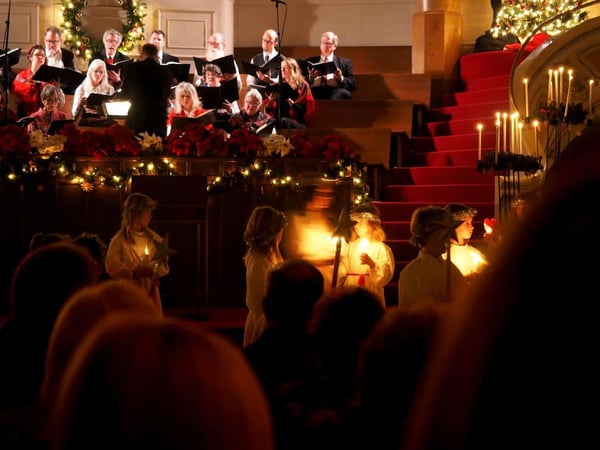
A ticketed Christmas concert or carol service — whether performed by your choir, a local school ensemble, or a combination of both — can raise significant funds if promoted beyond the congregation. Charge £5–£10 per seat, offer a retiring collection at the end, and sell mulled wine and mince pies in the foyer.
Add a “gift-a-seat” option on your church crowdfunding page: supporters who cannot attend can sponsor a ticket for a community member who cannot afford one, expanding both your reach and your mission narrative.
20. Easter Fundraiser (Egg Hunt + Family Day)
An Easter egg hunt is one of the most accessible family fundraisers a church can run. Charge a small entry fee per child (£2–£3), offer an Easter-themed activity trail around the church grounds, and add a bake sale and plant stall for adults. The combination of activities holds families for longer, increasing total spend per visit.
21. Harvest Festival Sale
A Harvest Festival sale — surplus produce, home-baked goods, jams and chutneys — aligns naturally with the church calendar and draws on the same produce-sale mechanics that work well year-round but feel especially fitting in autumn. Add a soup lunch (£4–£6 per bowl) for a warm, communal centrepiece.
22. Seasonal Gift-Wrapping Service
In the weeks before Christmas, set up a gift-wrapping station in a local shopping centre or supermarket entrance (with permission) and offer gift-wrapping in exchange for a small donation. Congregation volunteers staff the station in two-hour shifts. The service is visible, practical, and places your church in a public setting where it can make a positive impression on the wider community.

Capital and Building Fund Church Fundraiser Ideas
When a church needs to raise a large sum — £50,000 for a roof, £200,000 for a new building — a different approach is required. Capital campaigns typically run for 12–18 months and combine major-donor outreach, regular congregation pledges, and public fundraising events. Our guide on funding for failing infrastructure covers crowdfunding strategies for large structural projects that apply equally well to church buildings.
23. Crowdfunding Capital Campaign
A dedicated capital campaign on a crowdfunding platform gives your church a public, shareable home for its largest funding goal. Set a clear target, tell the story of why the building or project matters, and break the total down into tangible milestones: “We need £25,000 to make the roof watertight before winter.”
WhyDonate’s platform supports gift aid claims (where applicable), recurring donation pledges, and campaign updates — all of which increase donor confidence in long-term campaigns. WhyDonate charges 0% platform fees; standard payment processor fees apply.
24. Engraved Brick or Pew Programme
Offer congregation members and community supporters the opportunity to sponsor an engraved brick, paving stone, or pew plaque as a permanent part of a new or renovated building. Bricks typically sell for £50–£150 depending on size; pew plaques for £100–£500.
This fundraiser is uniquely effective for capital projects because it gives donors a tangible, lasting connection to the building. An unveiling ceremony when the project completes gives you a second moment of community celebration and media interest.
25. Faith Legacy Giving Programme
Invite established members — particularly those aged 60+ — to consider including the church in their will or estate plan. Legacy gifts (also known as planned gifts) are typically larger than lifetime donations and can fund capital projects that regular giving cannot reach.
This requires sensitivity: lead with stories of why the church matters and what the legacy programme will fund, rather than a financial pitch. Many churches partner with a charity solicitor to run an annual “legacy conversation” evening. The Charity Commission’s guidance on legacies is the authoritative UK reference for eligibility and compliance.

Virtual and Remote Church Fundraiser Ideas
Not all supporters can attend in person. Virtual fundraisers allow members who have moved away, supporters with mobility limitations, and online followers to participate fully.
26. Livestreamed Worship Service with Giving Appeal
Most churches already livestream services; adding a structured giving appeal within the stream turns a passive viewing experience into an active fundraising channel. Include a clear on-screen text box with your giving link, QR code, or WhyDonate campaign URL throughout the service, and make a direct, personal ask during a natural pause in the programme.
Virtual giving appeals work best when they are tied to a specific, tangible outcome: “Tonight we are trying to raise £2,000 to replace our children’s programme furniture” is more compelling than a general fund appeal.
27. Online Auction (30-Day Campaign)
An online auction running over 30 days allows bidders to participate from anywhere. Collect donated lots — artwork, experiences, professional services — and list them on a dedicated page. Send email updates every five to seven days to the entire congregation with a reminder of closing lots and current high bids. For tips on writing appeal emails that drive clicks back to your auction, see our fundraising appeal letters guide.
Online auctions tend to raise more than their in-person equivalents because the bidding pool is larger and the extended timeframe allows competitive bidding to develop naturally.
At a Glance: Church Fundraiser Ideas by Effort and Estimated Yield
| Fundraiser | Format | Effort | Estimated net yield | Best for |
| Coffee morning | Offline | Low | £150–£400 | Regular small income |
| Book sale | Offline | Low | £100–£300 | One-off gap fillers |
| Merchandise | Online/Offline | Low | £200–£600 | Brand + income |
| Prayer wall | Offline | Low | £50–£200 | Every service |
| Breakfast fundraiser | Offline | Low | £200–£800 | Quarterly event |
| Crowdfunding campaign | Online | Low–Medium | £500–£10,000+ | Specific projects |
| Online giving page | Online | Low | Ongoing | Recurring income |
| Text-to-give | Online | Low | 20–30% uplift | In-service giving |
| Peer-to-peer | Online | Medium | £1,000–£5,000 | Mission trips |
| Recurring giving drive | Online | Low | Predictable monthly | Operational costs |
| Social media fundraiser | Online | Low | £300–£2,000 | Community reach |
| Silent auction | Offline | Medium | £500–£3,000 | Annual events |
| Bible trivia night | Offline | Low–Medium | £200–£800 | Quarterly event |
| Hymn-athon | Offline | Medium | £500–£2,500 | Unique faith event |
| Sports day | Offline | Medium | £300–£1,500 | Family engagement |
| Garden sale | Offline | Low | £150–£500 | Spring/Summer |
| Movie night | Offline | Low | £150–£600 | Year-round |
| Potluck breakfast | Offline | Medium | £300–£1,200 | Community building |
| Christmas concert | Offline | Medium–High | £500–£3,000 | December |
| Easter family day | Offline | Medium | £300–£1,000 | Spring |
| Harvest festival | Offline | Low–Medium | £200–£700 | Autumn |
| Gift-wrapping service | Offline | Low | £300–£1,000 | Christmas |
| Capital crowdfunding | Online | High | £5,000–£50,000+ | Building projects |
| Engraved brick | Offline/Online | Medium | £2,000–£20,000 | Renovations |
| Legacy giving | Offline | High | Long-term | Estate gifts |
| Livestream giving appeal | Online | Low | £200–£2,000 | Remote members |
| Online auction | Online | Medium | £500–£4,000 | All audiences |

How to Start Your Church Fundraiser on WhyDonate
WhyDonate is a European fundraising platform used by thousands of churches, charities, and community organisations. It charges 0% platform fees — standard payment processor fees apply, which means more of every donation reaches your cause directly.
To start:
- Go to whydonate.com/fundraising/start
- Choose “Religion & Faith” as your fundraiser type
- Set your goal, add your story, and upload a photo or short video
- Share your campaign link via WhatsApp, email, Sunday bulletin, and social media
WhyDonate supports recurring donations, peer-to-peer fundraising pages, QR code giving, and multi-currency donations — covering both the in-person and online ideas in this guide.
Disclosure: WhyDonate operates this blog. We have included general fundraising advice alongside information about our own platform so you can compare all options fairly.
Start your church fundraiser — it’s free
Also Relevant for Catholic Parishes
Running a Catholic fundraiser? Many of these ideas translate directly, but there are faith-specific formats — second collections, Lenten appeals, and feast-day events — that work especially well in a parish context. See our dedicated Catholic fundraising ideas guide for parish-specific advice.
Key Takeaways
- Only 10–25% of a typical congregation tithes regularly, meaning fundraising is not optional — it is structural (Nonprofits Source, 2024).
- Churches that promote online giving see a 32% increase in total donations, and recurring givers contribute 120% more than one-off donors (Vanco Benchmark Giving Study, 2024).
- Match your fundraiser to your timeframe: quick events for immediate needs, online campaigns for ongoing income, and structured capital campaigns for major projects.
Ready to start? Launch your church fundraiser on WhyDonate — 0% platform fees
FAQs on Church Fundraising
What are the most effective church fundraiser ideas for raising large sums?
For large targets — building repairs, mission trip funding, or major equipment — crowdfunding campaigns combined with peer-to-peer fundraising consistently outperform standalone events. Pair an online campaign with one or two in-person events (a silent auction or a concert) to maximise both reach and community engagement.
How can a small church fundraise with limited volunteers?
Low-effort, high-return options work best for small teams: an online giving page requires almost no ongoing maintenance once set up; a text-to-give campaign can be introduced in a single Sunday service; and a coffee morning or bake sale can be organised by two or three people in under a week. Start with one online and one offline idea before scaling up. Our guide on how to increase donations covers the specific techniques that move occasional givers into regular donors.
How do you write a fundraising appeal letter for a church?
An effective church fundraising letter opens with a specific story — one person or family whose life your church has improved — rather than a general statement of need. It states the funding goal clearly, explains exactly what the money will fund, offers multiple ways to give (online link, cheque, in person), and closes with a warm, personal sign-off from the pastor or church leader. For ready-to-use templates and writing tips, see our church donation letters guide.
Are church donations tax-deductible in Europe?
Tax treatment of church donations varies by country. In the UK, Gift Aid allows churches registered as charities with HMRC to reclaim 25p for every £1 donated by a UK taxpayer at no extra cost to the donor. In Germany, charitable donations to registered religious organisations are generally deductible up to certain limits under §10b EStG. In the Netherlands, churches registered as ANBI institutions can offer donors a tax deduction on their personal income tax returns. Always check with your national charity regulator or a qualified tax adviser for rules specific to your jurisdiction.
What is peer-to-peer fundraising for a church?
Peer-to-peer fundraising means each congregation member sets up their own personal fundraising page linked to your central church campaign. They share it with their own networks — friends, family, colleagues — who may never have heard of your church. Because the ask comes from someone they already trust, donation conversion rates are significantly higher than cold appeals. WhyDonate’s peer-to-peer feature is available at no extra cost on all campaigns.
How can our church set up recurring online giving?
On WhyDonate, recurring giving is built into every campaign page — donors can choose a one-off amount or tick a box to give monthly. Recurring online givers contribute 120% more per year than one-off donors (Vanco Benchmark Giving Study, 2024), making this the single highest-value feature to activate. Promote it from the pulpit and in your email newsletter as “a small amount that makes a big difference every month.”